Start With Ketones: What BHB Actually Is
Beta-hydroxybutyrate (BHB) is a ketone body — a molecule your liver produces naturally when carbohydrate availability drops low enough, such as during fasting or a sustained ketogenic eating pattern. Under those conditions, ketones become an alternate fuel source for tissues that would normally rely heavily on glucose, including the brain. That's the biological backdrop Roscept's entire formula is built on.
Two Different Routes to the Same Molecule
There's an important distinction worth understanding before using a supplement like Roscept: producing BHB through your own metabolism (via fasting or a ketogenic diet) is not the same thing as consuming BHB from an external, supplemental source. Roscept supplies BHB as three mineral salts — magnesium, calcium and sodium beta-hydroxybutyrate — which is a direct-delivery route rather than a metabolic one. Taking a BHB supplement does not automatically mean your body has reached a particular state of ketosis.
The General Pathway, Step by Step
1. Two Capsules, Once Daily
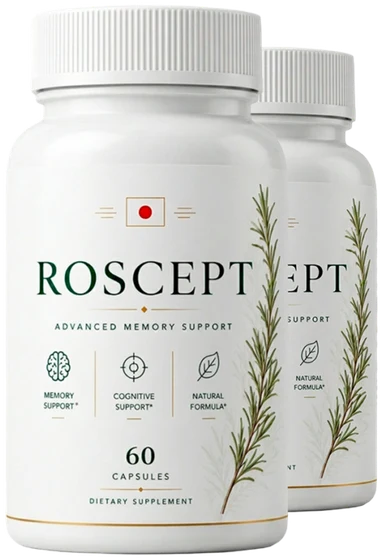
Per the supplied label, Roscept is taken as two capsules with a full 8 oz glass of water. Each serving delivers the 800 mg BHB mineral-salt blend.
2. Absorption Into the Bloodstream
The three BHB salts are absorbed through digestion, in the same general way other mineral-bound supplement ingredients are. From there, BHB can circulate and potentially act as an alternate energy source for certain tissues.
3. Why Daily Consistency Is Emphasized
Because Roscept works alongside — not instead of — your existing metabolism and diet, the supplied framing treats it as a routine supplement rather than a single-use fix. A single capsule serving is unlikely to meaningfully shift anything on its own; the marketing position is built around a sustained daily habit.
Does the Science Support a Memory Benefit?
Researchers continue to study ketones and their relationship to brain energy metabolism, and it's a genuinely active area of scientific interest. That said, general research on ketone metabolism is not the same as clinical evidence for a specific product. The supplied Roscept material does not include data showing that Roscept itself improves memory, focus or cognitive performance — a distinction worth keeping in mind before setting expectations. For a broader look at what the formula is marketed to support, see Roscept Benefits: What Memory Support Really Looks Like.
The Diet Connection
The supplied Roscept label also recommends a very low-carbohydrate eating pattern (roughly 70% fat, 25% protein, 5% carbohydrate) to support ketosis alongside the supplement. That's a demanding dietary shift, and not one that's appropriate for everyone — particularly people managing diabetes. The full discussion is in Roscept and Ketosis: What the Diet Recommendation Means.
Bottom Line on the Mechanism
Roscept's mechanism rests on a real, well-studied biological pathway — ketone bodies as an alternate brain fuel source — delivered through an external mineral-salt supplement rather than through your body's own ketone production. That's a reasonable formulation concept, but it's not the same as documented proof that this specific product changes memory or cognition.
See the full ingredient breakdown and pricing: View Roscept packages →